
At the beginning, almost every team works the same way. Finances are managed in spreadsheets, while some information is kept in separate reports. One person, a many-armed octopus, remembers where everything is and still manages to keep it all under control.
But there comes a point when, as the team scales, this model stops working and the octopus can no longer keep up. More projects, more traffic sources, larger budgets and more people responsible for them. Manual control not only starts taking too much time, but also leads to losses.
The moment when media buying companies need change
100FTD faced exactly this problem. Data on expenses, campaign results, payouts and operating costs was stored in different spreadsheets that had to be constantly consolidated manually.
At some point, it became clear that the problem was no longer the spreadsheets themselves, but the approach. When answering a simple management question requires opening several files and checking numbers with different people, the system stops scaling.
“We have a large number of parallel processes: different projects, teams, traffic sources, budgets and models. In such conditions, even a small inaccuracy can affect the final result. Consolidating information from different sources and checking discrepancies took the most time. We could see the performance of an individual campaign, but for a management decision it is important to understand the system as a whole: actual expenses, additional operating costs, cash movement, the result of a specific direction and its impact on the overall arbitrage P&L,” says Yaroslav, COO at 100FTD.
The iGaming market has long stopped forgiving inefficiency. If the old principle was “there is a budget — launch traffic,” today profitability depends on the quality of financial management.
“That was when we decided to move from manual accounting to a unified financial control system. Together with the CostView team, we automated a significant part of the processes and brought financial data into one environment,” Yaroslav shares.
One management system in the iGaming sector instead of dozens of spreadsheets
“The 100FTD team came to us with a very specific request — to see how the service works in real operations and adapt it to their processes. They were concerned about three things: discrepancies between reports, time lost on manual reporting and the inability to quickly calculate profit for each offer and buyer. We refined the first modules during onboarding specifically around these pain points,” says CostView founder Dmytro.
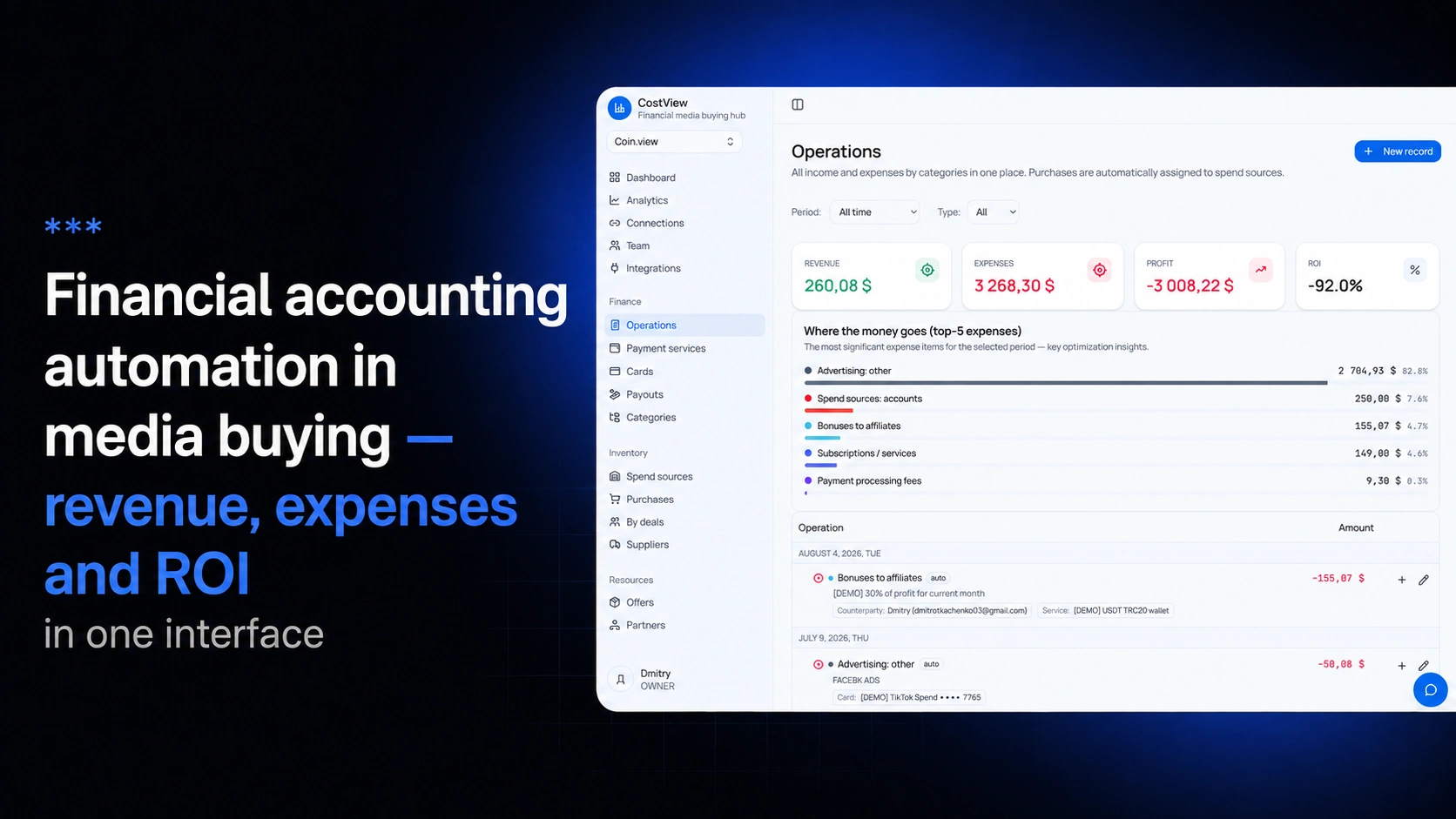
After implementing the unified system, the team was able to see not isolated numbers but the complete financial picture.
The key metrics for daily management became:
- ROI by offers and directions
- actual PnL
- team cash flow
- expenses and profitability by individual projects
- operating expenses that had previously remained “invisible”
Automation reduced the amount of manual work, lowered the number of errors and made it possible to make faster decisions based on up-to-date data.
In addition, the system helped the team better protect confidential data.
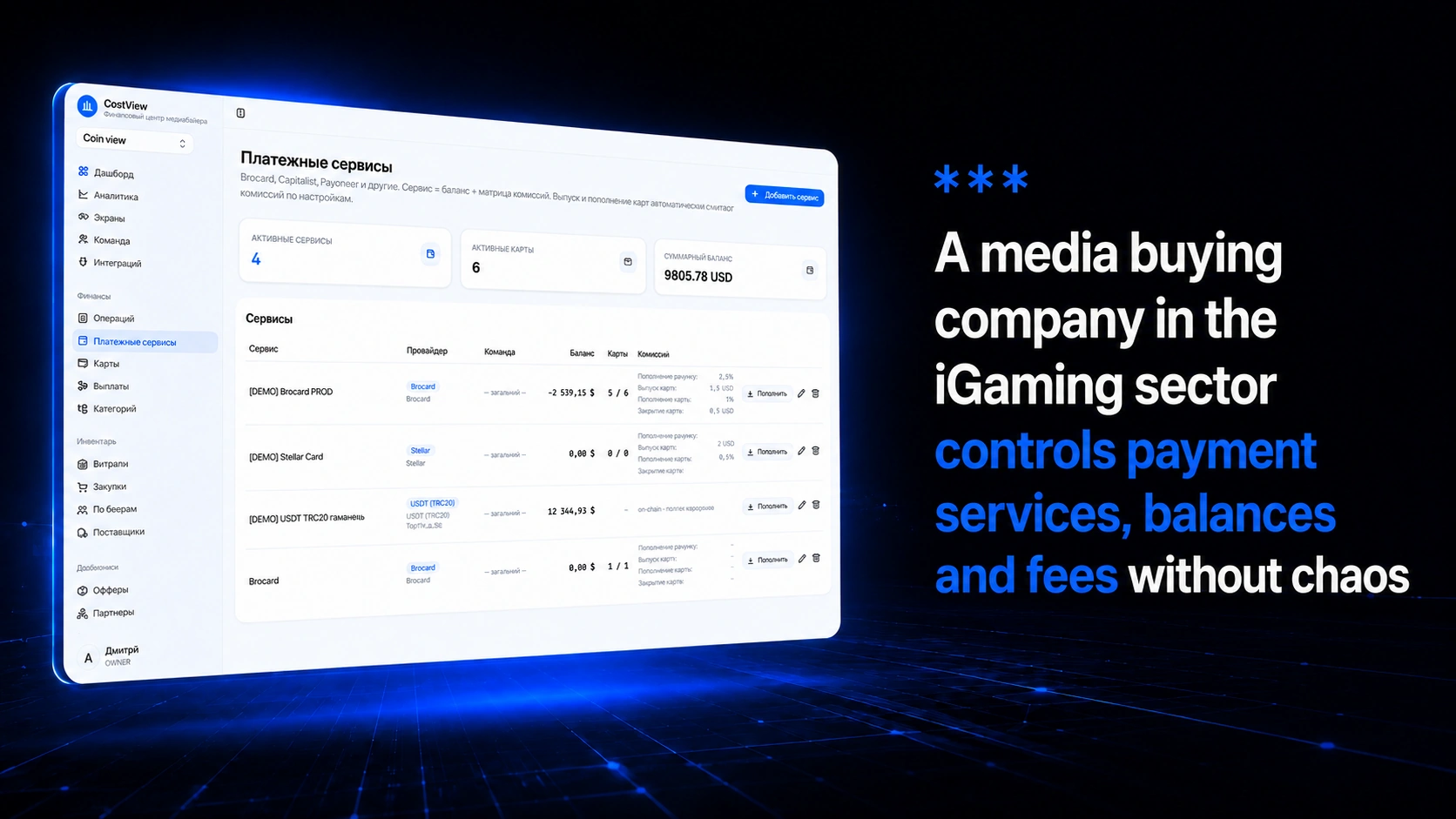
“We proceed from the fact that a team’s financial data is sensitive information and access to it cannot simply be based on trust. That is why we offer two formats: Cloud, where the data is stored on our infrastructure with proper protection, and Self-Hosted, where the data never physically leaves the client’s infrastructure. If a promise is trust by words, self-hosted is a technical guarantee: the question of whether anyone has access to the data is resolved at the architectural level rather than by company policy,” Dmytro adds.
Result
Today, financial management at 100FTD has become much more systematic. The team gets the information it needs faster, controls expenses better and spends less time preparing reports. Most importantly, decisions are made based on the complete picture rather than separate spreadsheets.
The full story of the cooperation between 100FTD and CostView, as well as the implementation details, can be found in the interview on TrafficUltras.
На старте почти каждая команда работает одинаково. Финансы ведутся в таблицах, что-то еще хранится в отдельных отчетах. Один человек, многорукий осьминог, помнит, где что лежит, и успевает держать все под контролем.
Но приходит момент, когда с масштабированием эта модель перестает работать и осьминог уже не справляется. Больше проектов, больше источников трафика, больше бюджетов и ответственных людей. Ручной контроль не просто начинает отнимать слишком много времени, но и приводит к потерям.
Момент, когда медиабаинговым компаниям нужны изменения
В 100FTD столкнулись именно с этой проблемой. Данные о расходах, результатах кампаний, выплатах и операционных затратах находились в разных таблицах, которые приходилось постоянно сводить вручную.
В какой-то момент стало очевидно: проблема уже не в таблицах, а в самом подходе. Когда для ответа на простой управленческий вопрос нужно открыть несколько файлов и сверить цифры между разными людьми, система перестает масштабироваться.
“У нас большое количество параллельных процессов: разные проекты, команды, источники трафика, бюджеты и модели. В таких условиях даже незначительная неточность может повлиять на итоговый результат. Больше всего времени занимали сведение информации из разных источников и проверка расхождений. Мы могли видеть показатели отдельной кампании, но для управленческого решения важно понимать систему в целом: фактические расходы, дополнительные операционные затраты, движение средств, результат конкретного направления и его влияние на общий P&L арбитража”, — рассказывает Ярослав, COO в 100FTD.
Рынок iGaming давно перестал прощать неэффективность. Если раньше работал принцип «есть бюджет — запускаем трафик», то сегодня прибыльность зависит от качества управления финансами.
“Именно тогда мы решили перейти от ручного учета к единой системе финансового контроля. Вместе с командой CostView мы автоматизировали значительную часть процессов и собрали финансовые данные в одной среде”, — делится опытом Ярослав.
Единая система управления в сфере iGaming вместо десятков таблиц
“Команда 100FTD пришла с очень конкретным запросом — посмотреть, как сервис работает в реальной работе, чтобы адаптировать его под свои процессы. Их беспокоили три вещи: расхождения в цифрах между отчетами, потеря времени на ручную отчетность и невозможность быстро посчитать прибыль по каждому офферу и байеру. Именно под эти боли мы дорабатывали первые модули на онбординге”, — рассказывает фаундер CostView Дмитрий.
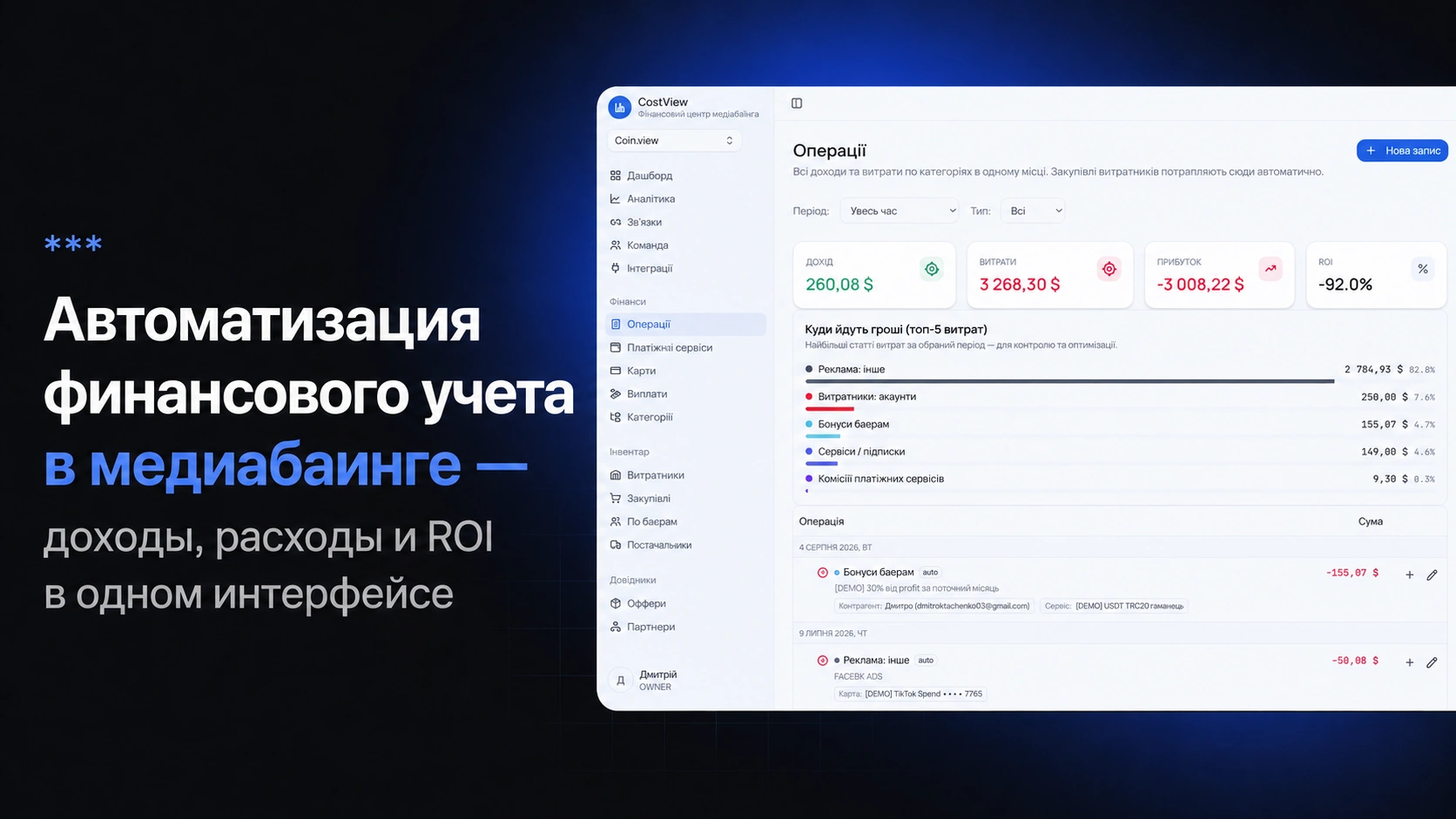
После внедрения единой системы команда получила возможность видеть не отдельные цифры, а полную финансовую картину.
Для ежедневного управления ключевыми стали:
- ROI по офферам и направлениям
- фактический PnL
- кешфлоу команды
- расходы и прибыльность по отдельным проектам
- операционные расходы, которые раньше оставались «невидимыми»
Автоматизация сократила объем ручной работы, уменьшила количество ошибок и позволила быстрее принимать решения на основе актуальных данных.
Кроме того, такая система помогла лучше хранить конфиденциальные данные команды.
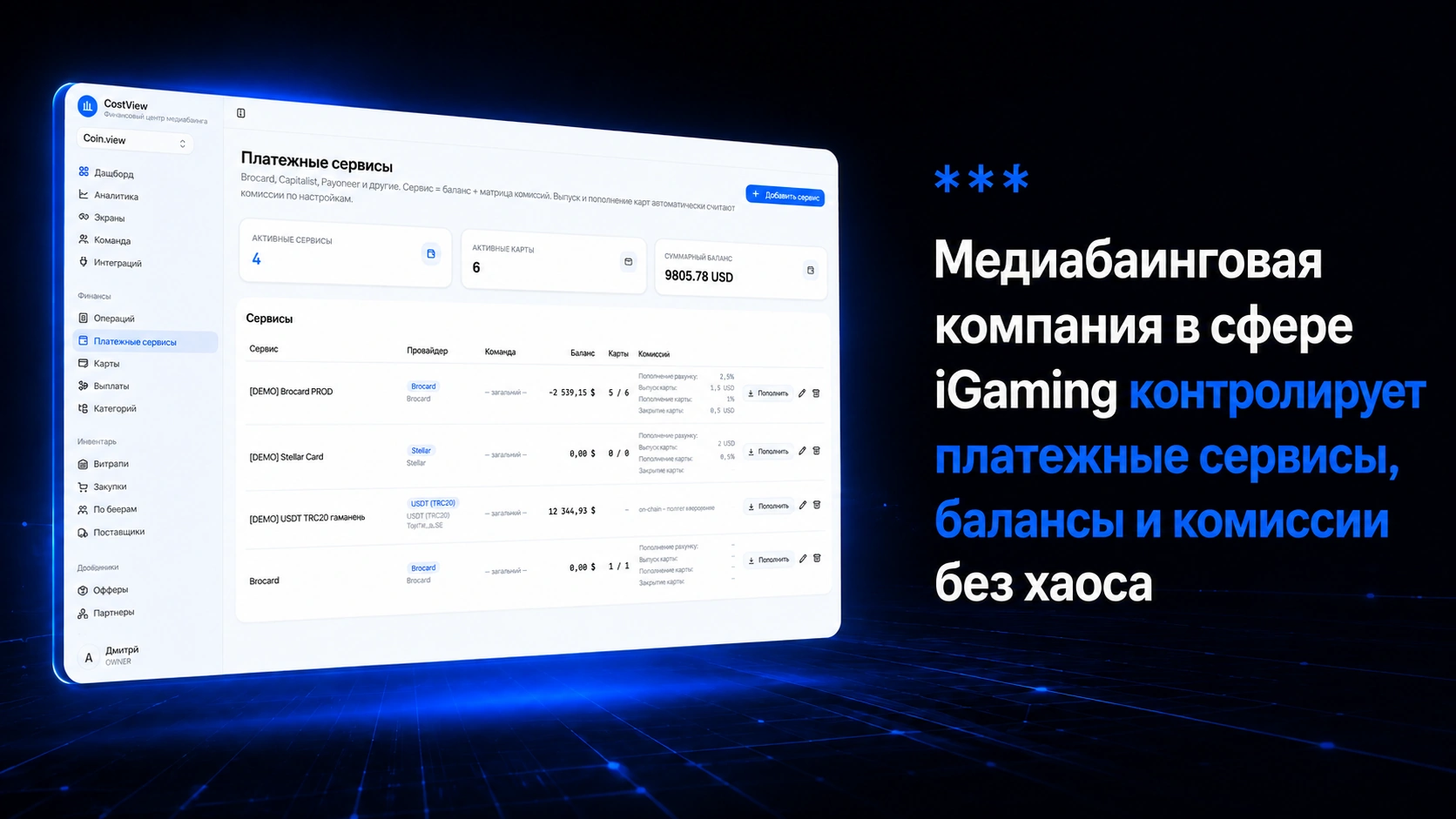
“Мы исходим из того, что финансовые данные команды — это чувствительная информация, доступ к которой нельзя отдавать на доверие. Поэтому предлагаем два формата: Cloud, где данные хранятся на нашей инфраструктуре под надлежащей защитой, и Self-Hosted, где данные физически не покидают инфраструктуру самого клиента. Если обещание — это доверие на слово, то self-hosted — техническая гарантия: вопрос «есть ли у кого-то доступ к данным» снимается архитектурно, а не на уровне политики компании”, — добавляет Дмитрий.
Результат
Сегодня финансовое управление в 100FTD стало значительно более системным. Команда быстрее получает нужную информацию, лучше контролирует расходы и тратит меньше времени на подготовку отчетности. Самое важное — решения принимаются на основе полной картины, а не отдельных таблиц.
Полную историю сотрудничества 100FTD и CostView, а также детали внедрения можно прочитать в интервью на TrafficUltras.
На старті майже кожна команда працює однаково. Фінанси ведуться в таблицях, ще щось зберігається в окремих звітах. Одна людина, багаторукий восьминіг, пам’ятає, де що лежить, і встигає тримати все під контролем.
Але приходить час, коли з масштабуванням ця модель перестає працювати і восьминіг уже не справляється. Більше проєктів, більше джерел трафіку, більше бюджетів і відповідальних людей. Ручний контроль не просто починає забирати занадто багато часу, а й призводить до втрат.
Момент, коли в медіабаїнгових компаніях потрібні зміни
У 100FTD зіткнулися саме з цією проблемою. Дані про витрати, результати кампаній, виплати та операційні витрати знаходилися в різних таблицях, які доводилося постійно зводити вручну.
У якийсь момент стало очевидно: проблема вже не в таблицях, а в самому підході. Коли для відповіді на просте управлінське питання потрібно відкривати кілька файлів і звіряти цифри між різними людьми, система перестає масштабуватися.
“У нас велика кількість паралельних процесів: різні проєкти, команди, джерела трафіку, бюджети та моделі. За таких умов навіть незначна неточність може вплинути на підсумковий результат. Найбільше часу займало зведення інформації з різних джерел і перевірка розбіжностей. Ми могли бачити показники окремої кампанії, але для управлінського рішення важливо розуміти систему в цілому: фактичні витрати, додаткові операційні, рух коштів, результат конкретного напряму та його вплив на загальний P&L арбітражу”, — розповідає Ярослав, COO в 100FTD.
Ринок iGaming давно перестав пробачати неефективність. Якщо раніше працював принцип «є бюджет — запускаємо трафік», то сьогодні прибутковість залежить від якості управління фінансами.
“Саме тоді ми вирішили перейти від ручного обліку до єдиної системи фінансового контролю. Разом із командою CostView ми автоматизували значну частину процесів і зібрали фінансові дані в одному середовищі”, — ділиться досвідом Ярослав.
Єдина система управління в сфері iGaming замість десятків таблиць
“Команда 100FTD прийшла з дуже конкретним запитом — подивитися, як сервіс працює в реальній роботі, щоб адаптувати його під свої процеси. Їх турбувало три речі: розбіжності в цифрах між звітами, втрата часу на ручну звітність і неможливість швидко порахувати прибуток по кожному оферу та байєру. Саме під ці болі ми допилювали перші модулі на онбордингу”, — розповідає фаундер CostView Дмитро.
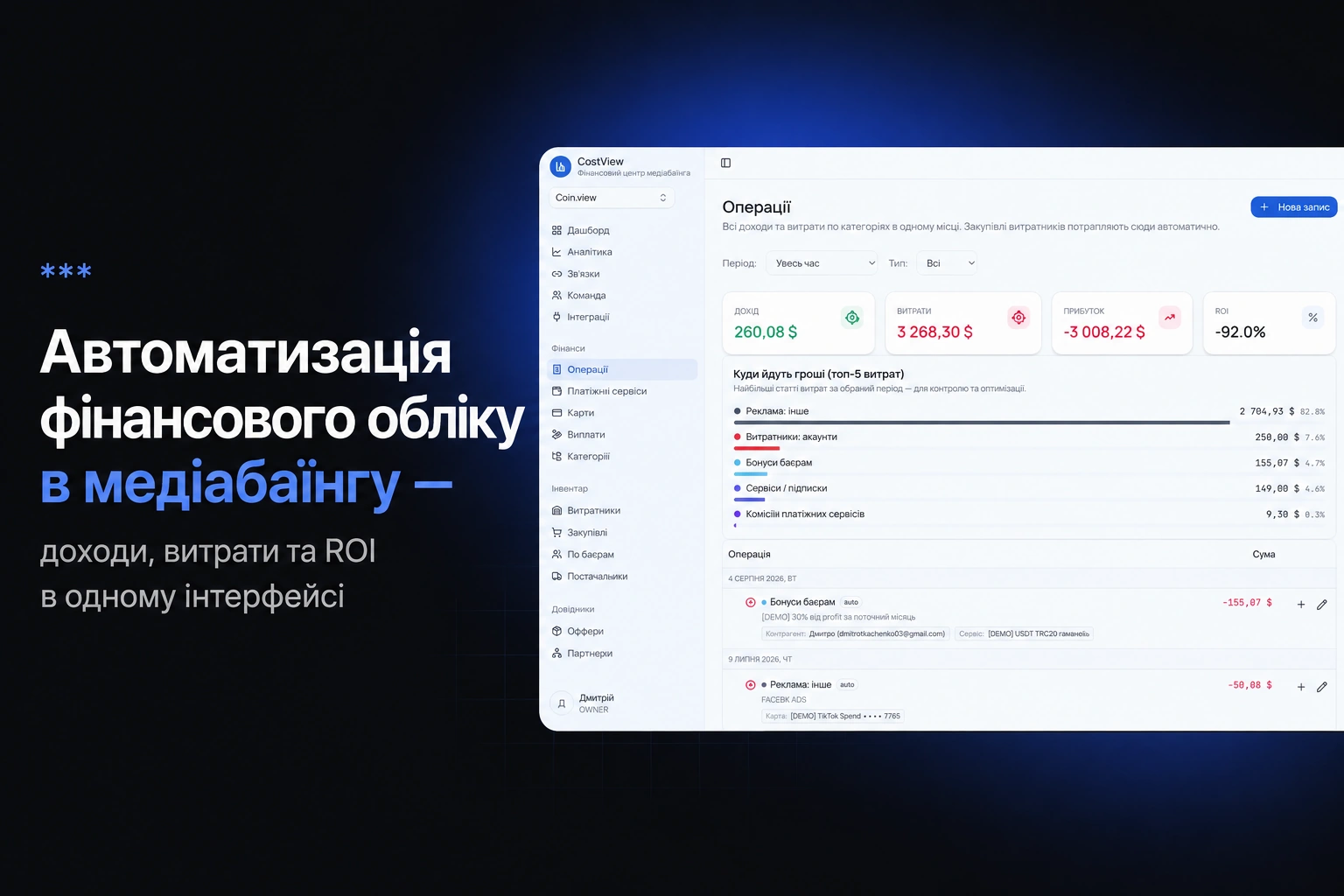
Після впровадження єдиної системи команда отримала можливість бачити не окремі цифри, а повну фінансову картину.
Для щоденного управління ключовими стали:
- ROI за оферами та напрямками
- фактичний PnL
- кешфлоу команди
- витрати та прибутковість по окремих проєктах
- операційні витрати, які раніше залишалися «невидимими»
Автоматизація скоротила обсяг ручної роботи, зменшила кількість помилок і дозволила швидше приймати рішення на основі актуальних даних.
Крім того, така система допомогла краще зберігати конфіденційні дані команди.
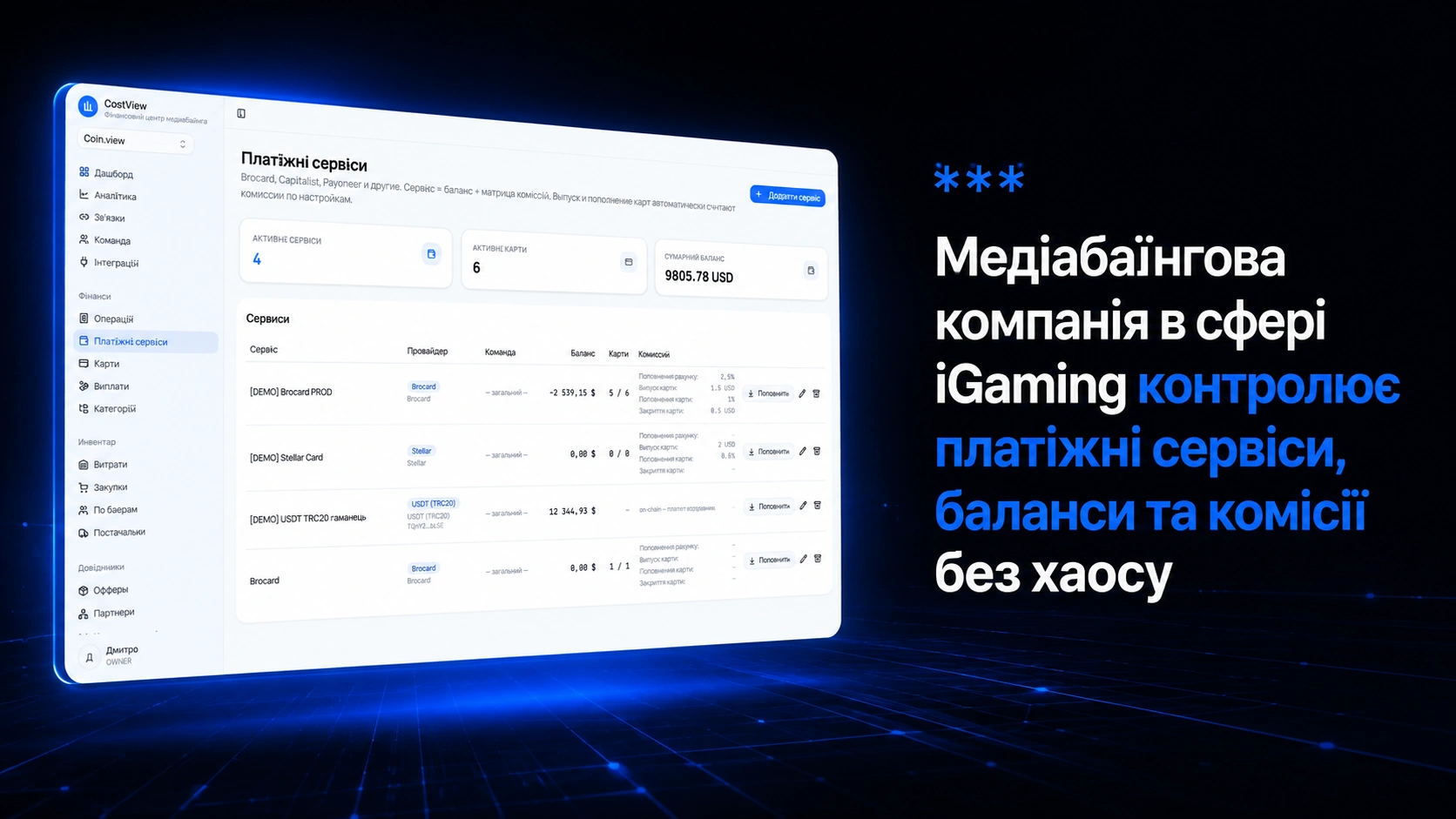
“Ми виходимо з того, що фінансові дані команди — це чутлива інформація, доступ до якої не можна віддавати на довіру. Тому пропонуємо два формати: Cloud, де дані зберігаються на нашій інфраструктурі під належним захистом, і Self-Hosted, де дані фізично не залишають інфраструктуру самого клієнта. Якщо обіцянка — це довіра на слово, то self-hosted — технічна гарантія: питання «чи хтось має доступ до даних» знімається архітектурно, а не на рівні політики компанії”, — додає Дмитро.
Результат
Сьогодні фінансове управління в 100FTD стало значно системнішим. Команда швидше отримує потрібну інформацію, краще контролює витрати та витрачає менше часу на підготовку звітності. Найважливіше — рішення приймаються на основі повної картини, а не окремих таблиць.
Повну історію співпраці 100FTD та CostView, а також деталі впровадження можна прочитати в інтерв’ю на TrafficUltras.